
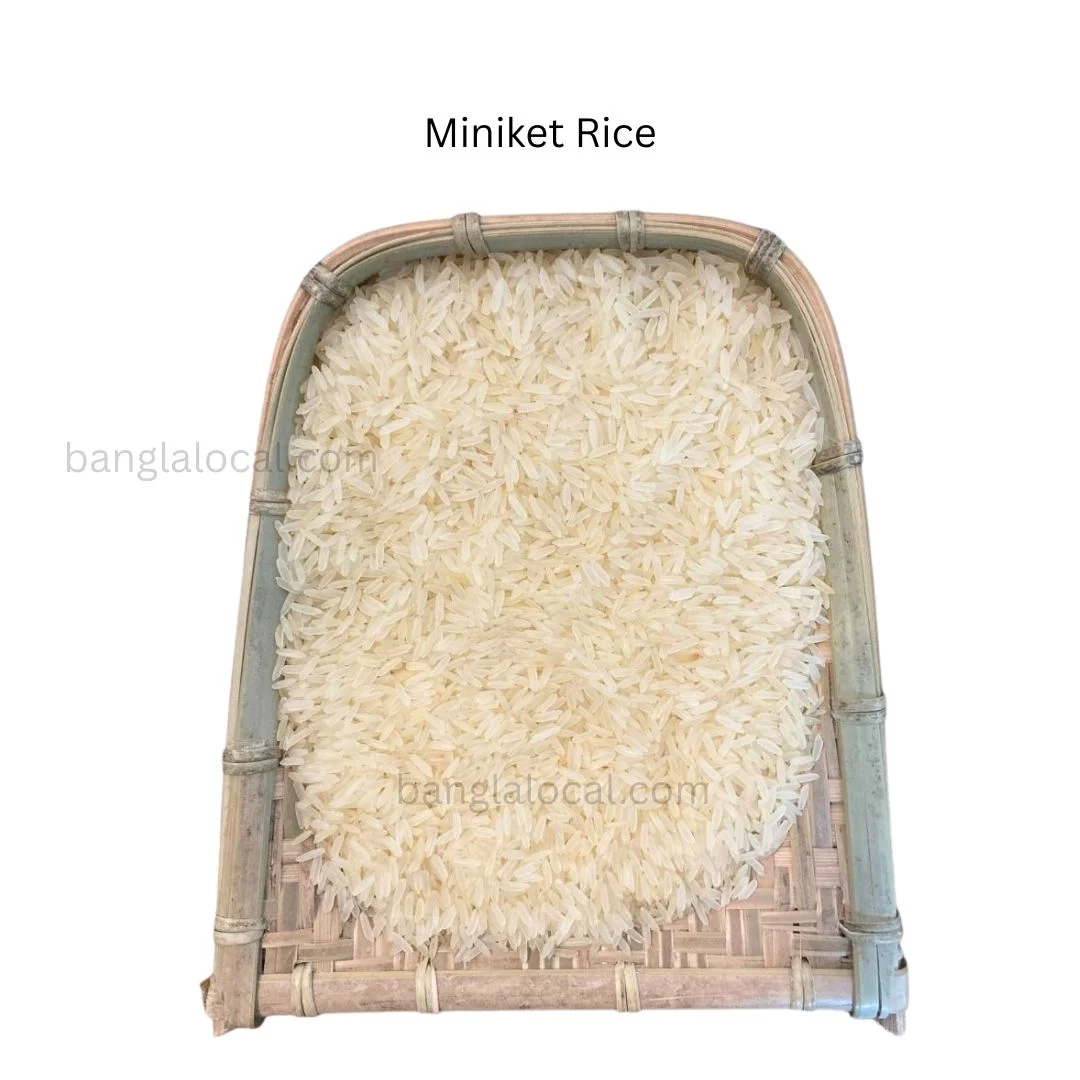
Miniket Rice 25 Kg bag | Premium Quality Sheddho Chaal | Unpolished
₹2,450.00
- Parboiled (sheddho chal): Steamed and dried before milling, the way Bengal homes have always liked it.
- Unpolished grain: Skips heavy polishing, so more natural goodness stays in every grain.
- Medium Long, slightly thick grain: Bolder than Jeerakathi and Banskathi, so it keeps you full longer.
- Soft and separate: Cooks fluffy, not sticky – perfect for dal-bhaat and macher jhol.
- Everyday rice: A trusted choice for lunch and dinner, every single day.
What Is Miniket Rice?
Miniket Rice is a medium-grain rice that Bengali families cook every day. It is soft, filling and goes well with dal, sabji and fish curry. Our Miniket is sheddho chal (parboiled rice), and it is unpolished.
The name has a fun backstory. In the 1980s, farmers in West Bengal received new rice seeds in small “minikit” packets. Over time, “minikit” became “Miniket”, and the name stuck.
Why Choose Unpolished Sheddho Miniket Rice?
A lot of Miniket rice in the market gets polished hard to look extra white and shiny. However, heavy polishing strips away the outer layers, where many nutrients sit. Our Miniket Rice skips that step, so you get a grain closer to how nature made it.
Parboiled vs Raw Rice: Sheddho Chal vs Atop Chal
To make parboiled rice, mills soak the paddy, steam it and dry it with the husk still on. After that, they remove the husk. This age-old method pushes some vitamins from the outer layer into the grain itself.
Raw rice (atop chal) skips the steaming step. As a result, it cooks softer and stickier. That’s why many Bengali homes keep atop chal for puja bhog and payesh, and use sheddho chal for daily meals.
Unpolished vs Polished Miniket Rice
| Feature | Unpolished Miniket (Ours) | Heavily Polished Miniket | ||
|---|---|---|---|---|
| Polishing | Skipped | Polished for a white, glossy look | ||
| Outer layers | Mostly kept | Mostly removed | ||
| Nutrients | More fibre, vitamins and minerals | Fewer nutrients left | ||
| Look | Natural, not glossy | Bright white and shiny | ||
| After the meal | Feels more filling | Digests faster |
Is Parboiled Rice Good for Daily Eating?
Yes. For most families, unpolished parboiled rice is a smart pick for everyday meals. Here’s why:
- More B vitamins: Parboiling moves B vitamins like thiamine from the bran into the grain. So fewer of them get lost during milling.
- More fibre: Because we skip heavy polishing, more of the fibre-rich outer layer stays on the grain.
- Steadier energy: Parboiled rice generally has a lower glycaemic index than regular white rice. In simple words, it releases energy more slowly.
- Firm, separate grains: Steaming makes the grains firm, so they don’t turn mushy after cooking.
Of course, rice is still a carb-rich food. If you are managing diabetes or any health condition, ask your doctor how much rice suits you.
Miniket vs Jeerakathi vs Banskathi Rice
All three are popular in Bengali kitchens. However, they differ in grain size and how they feel on the plate. Use this table to pick the right one.
| Feature | Miniket Rice | Jeerakathi Rice | Banskathi Rice | |||
|---|---|---|---|---|---|---|
| Grain size | Medium | Small, like cumin seeds | Long and fine | |||
| Thickness | Slightly thick | Thin | Thin | |||
| Texture after cooking | Soft, fluffy, filling | Light and soft | Light and fine | |||
| Best for | Daily lunch and dinner | Light everyday meals | Special meals and guests | |||
In short, pick Miniket for hearty daily meals. On the other hand, choose Jeerakathi or Banskathi when you want finer, lighter grains.
How to Cook Miniket Rice
Parboiled rice needs a little more water and time than raw rice. Also, a short soak helps the grains cook evenly.
Open-Pot Method (Phyan Gala Bhaat)
- Wash 1 cup of rice 2–3 times until the water runs clear.
- Soak it for 20–30 minutes.
- Bring 5–6 cups of water to a boil in a large pot.
- Add the rice and cook on medium heat for 15–20 minutes. Stir once or twice.
- Press a grain between your fingers. If it’s soft all the way through, it’s ready.
- Drain the starchy water (phyan), cover the pot and let it rest for 5 minutes.
Pressure Cooker Method
- Wash and soak 1 cup of rice as above.
- Add 2½–3 cups of water and a few drops of oil or ghee.
- Cook for 3–4 whistles on medium heat.
- Let the pressure drop on its own, then fluff the rice gently.
Tip: Every stove and cooker is a little different. So adjust the water slightly after your first batch.
Best Bengali Dishes to Eat With Miniket Rice
- Dal-bhaat with aloo bhaja and a wedge of lemon
- Macher jhol or rui kalia
- Shukto, chorchori and other niramish dishes
- Dimer jhol or Sunday chicken curry
- Panta bhaat – leftover rice soaked overnight in water
How to Store Miniket Rice
- Keep it in an airtight steel or food-grade container.
- Store it in a cool, dry place away from sunlight.
- Always use a dry cup or spoon to take rice out.
- Add a few dry neem or bay leaves to keep insects away.
Miniket Rice: Product Details
| Product | Miniket Rice | Rice type | Parboiled (sheddho chal) | Processing | Unpolished | Grain | Medium size, slightly thick | Cooked texture | Soft, fluffy, separate grains | Best for | Daily lunch and dinner | Sold by | Bangla Local |
Frequently Asked Questions
What is Miniket rice?
Miniket rice is a medium-grain rice that West Bengal families eat every day. The name comes from the “minikit” seed packets given to Bengal farmers in the 1980s. Bangla Local’s Miniket Rice is parboiled and unpolished.
Is Miniket rice parboiled or raw?
The market sells Miniket in both forms. Ours is parboiled, known in Bengali as sheddho chal. It cooks into soft, separate grains.
Is unpolished Miniket rice good for daily use?
Yes. Because it skips heavy polishing, it keeps more fibre, vitamins and minerals than polished white rice. That makes it a sound choice for everyday meals.
How is Miniket different from Jeerakathi and Banskathi rice?
Miniket has medium, slightly thick grains, so it feels more filling. Jeerakathi has tiny, slim grains, while Banskathi has long, fine grains.
How much water do I need to cook Miniket rice?
For the open-pot method, use 5–6 cups of water per cup of rice and drain the extra. In a pressure cooker, use 2½–3 cups of water and cook for 3–4 whistles.
Does unpolished rice take longer to cook?
Slightly, yes. However, soaking the rice for 20–30 minutes cuts the cooking time and helps it cook evenly.
How should I store Miniket rice?
Store it in an airtight container in a cool, dry place. A few dry neem or bay leaves help keep insects away.
| Weight | 25 kg |
|---|
Only logged in customers who have purchased this product may leave a review.
Related products
-
Bengali Gawa Ghee | With Lab Report | No Additives
5Price range: ₹380.00 through ₹699.00Select options This product has multiple variants. The options may be chosen on the product page -
-



 Home
 Whishlist
 Compare
 Checkout
 Account
Reviews
There are no reviews yet.